Vearst Friend: A Hand-Painted Serif Font That Elevates Your Handmade Goods
If you've ever spent hours tweaking a label, re-cutting a sticker because the letters didn’t hold up at 0.5 inches, or hesitated before listing a printable because the font felt too generic—then Vearst Friend is exactly what your shop’s been missing. As someone who designs candle labels, wedding welcome boards, and digital planner kits for small-batch sellers, I’ve tested dozens of “hand-painted” fonts—and most fall flat when scaled down or cut on a Cricut. Not Vearst Friend. Its dual nature—a hand-painted brush font paired with a refined serif version—gives you expressive charm *and* crisp readability, without compromise.
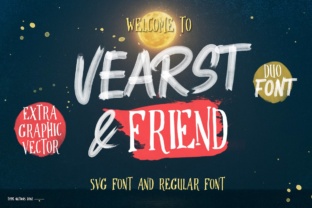
What makes Vearst Friend different isn’t just the look—it’s the build. It uses high-resolution brush stroke images embedded directly into the vector outlines, so every curve retains texture and definition at any size. Whether you’re printing a delicate tea towel tag at 12 pt or cutting a 10-inch farmhouse sign from wood veneer, the serif version holds clean lines, while the SVG brush variant delivers authentic, slightly imperfect energy—like ink pressed fresh onto paper. That duality means you’re not choosing between personality and precision. You get both.
Here’s where it shines in real product work:
- Candle & soap labels: Use the serif version for ingredient lists and net weight (it’s legible even at 8 pt), and layer the brush style for the brand name—creating instant hierarchy and warmth that reads as artisanal, not mass-produced.
- Wedding stationery: The brush variant adds romance to “Mr. & Mrs.” on invites, while the serif handles RSVP details cleanly. On acrylic place cards or foil-stamped menus, both styles retain elegance without bleeding or pixelation.
- Digital printables: Planner covers, habit trackers, and quote pages gain tactile appeal—especially when layered over watercolor backgrounds. Because Vearst Friend renders sharply in PDFs and PNG exports, your customers won’t see jagged edges on their home printers.
- SVG-style designs for Cricut/Silhouette: Unlike many brush fonts that turn muddy when converted to cut files, Vearst Friend’s SVG version imports cleanly, with smooth anchor points and no stray nodes. I’ve used it for layered vinyl decals on mugs and tote bags—and every letter cut true, even the fine loops in “y” and “g.”
- Seasonal packaging: For holiday cookie boxes or spring botanical gift tags, the brush style evokes hand-lettered charm, while the serif keeps batch numbers, dates, and care instructions scannable and professional.
Readability matters—not just for your customers, but for your workflow. The serif version is optimized for short-to-medium text blocks: product descriptors on Etsy listings, back-of-package copy, or QR code captions. It’s not meant for body text in a 20-page workbook—but it *is* perfect for headings, subheads, and branded callouts in templates. The brush version? Best kept for display use: names, titles, slogans, and decorative phrases. Think “Hand-Poured in Portland” on a jar, not the full ingredients list.
Pairing is intuitive and effective. Try the brush style with a light, airy sans serif like Montserrat Light for contrast that feels modern yet grounded—or pair the serif version with a subtle script (think Allura or Great Vibes) for wedding suites where elegance needs balance. Avoid pairing two highly textured fonts; Vearst Friend’s brush strokes already carry visual weight, so let them breathe beside something clean and functional.
You’ll get both versions in OTF, TTF, and SVG formats—so whether you're designing in Canva, Illustrator, Silhouette Studio, or Procreate, you’re covered. There are no ligatures or swashes included (which keeps file sizes lean and cuts predictable), and multilingual support covers Western European languages—enough for most US, CA, AU, and EU-based shops. No need to hunt for alternate glyphs mid-project.
Licensing is straightforward and business-ready: Vearst Friend includes commercial use rights. That means you can embed it in editable Canva templates, sell SVG cut files on Etsy, print it on physical products (mugs, shirts, stickers), and use it in client branding projects—no extra fees or attribution required. Just make sure you’re using the official download (not a free knockoff), and you’re fully covered for handmade and digital sales.
One practical note: When prepping for cutting machines, always convert the brush SVG to outlines *before* sending to your software—this preserves stroke integrity and avoids unexpected scaling shifts. And for printed cards or tags under 1.5 inches wide, stick with the serif version. It’s designed to stay sharp where others blur.
I’ve used Vearst Friend on everything from lavender-scented soy candle jars to boutique baby onesie hang tags—and each time, customers comment on how “thoughtful” and “intentional” the typography feels. That’s not accidental. It’s the result of a serif font built for makers, not just designers. It doesn’t shout. It invites. It supports your product instead of competing with it.
If your brand stands for care, craftsmanship, and quiet confidence—not flashiness or trend-chasing—Vearst Friend becomes more than a font. It’s a consistent voice across labels, listings, social posts, and packaging. It helps repeat buyers recognize your work at a glance. It makes your “thank you” card feel personal, not programmed. And it does all that while staying technically reliable—no last-minute font substitutions, no export surprises, no customer complaints about blurry text.
For anyone building a handmade business where every detail reflects value, Vearst Friend isn’t just another typeface. It’s the quiet upgrade your product presentation has needed all along.