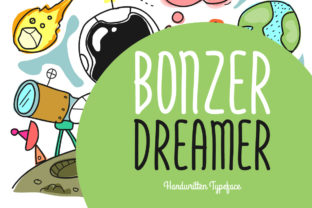
Bonzer Dreamer: A Handwritten Font That Builds Trust
As a small business owner who designs my own labels, social posts, and packaging—often at 10 p.m. after closing the shop—I know how much a single font can shape how customers see me. Bonzer Dreamer isn’t just another script handwritten font. It’s warm, intentional, and quietly confident—like handwriting that’s been practiced until it feels both personal and polished. Its soft curves, subtle contrast, and natural rhythm give it presence without shouting. It doesn’t try to be “cute” or “vintage” or “edgy.” It simply feels human—and in a world of algorithm-driven feeds and mass-produced templates, that humanity builds real connection.
I first used Bonzer Dreamer for my ceramic studio’s product labels. Before, I’d cycled through generic script fonts that either looked too stiff or too chaotic. Bonzer Dreamer struck the right balance: legible enough for a 12mm label on a handmade mug, expressive enough to reflect the care in each piece. Customers started mentioning the “friendly handwriting” on our thank-you cards—something I hadn’t even planned for. That’s when I realized: consistency isn’t about repeating the same logo everywhere. It’s about carrying the same feeling across every touchpoint. And Bonzer Dreamer delivers that feeling reliably.
It works especially well where warmth and authenticity matter most. Think café menus printed on kraft paper, boutique logos stitched onto linen tags, candle jar labels with minimalist ingredient lists, coaching business headers on Instagram Stories, or music therapy session worksheets shared with clients. Because Bonzer Dreamer is designed as a display font—not meant for body text—it shines brightest at larger sizes: website banners (36px+), poster headlines, t-shirt prints, and digital ad creatives. On mobile screens, it holds up cleanly in thumbnails and profile highlights when used sparingly and thoughtfully.
That said, readability still matters. I tested Bonzer Dreamer on a small batch of reusable shopping bags—printed at 18pt on off-white canvas. It held up beautifully. But I wouldn’t use it below 14pt for printed product labels or on low-resolution social media avatars. For those, I pair it with a clean sans serif font like Montserrat or Inter—simple, neutral, and highly legible. That pairing gives me flexibility: Bonzer Dreamer for the brand name or tagline, the sans serif for ingredients, dates, sizes, or contact info. It’s a practical rhythm—expressive + functional—that keeps the brand clear without sacrificing charm.
For packaging design, Bonzer Dreamer adds quiet distinction. A local herbal tea brand used it for their “Lavender & Lemon Balm” variant name on matte-finish tins—paired with a light serif for origin details. The result? Shelves didn’t feel crowded; instead, each flavor had its own gentle voice. Same goes for service-based businesses: a freelance book editor uses Bonzer Dreamer only in her email signature and proposal headers—never in long documents—but clients consistently describe her communications as “thoughtful” and “approachable.” That’s not coincidence. Typography cues emotion before a single word is read.
If you’re building your brand from scratch—or refining one that’s grown beyond DIY templates—Bonzer Dreamer helps unify things fast. Use it for your logo (especially if your name flows well in cursive), your website hero banner, your Instagram highlight covers, and your printed thank-you notes. Avoid overusing it: skip long paragraphs, dense flyers, or multi-page PDFs. Instead, treat it like a signature—reserved for moments where you want people to pause, recognize, and remember.
Before committing across all materials, test Bonzer Dreamer in three real places: print a mockup of your product label at actual size, preview your website header on a phone screen, and paste it into a Canva social post template at thumbnail resolution. See how it behaves—not just how it looks on your desktop. You’ll quickly spot whether spacing feels right, whether letters connect smoothly, and whether it stays legible under real conditions.
And always check the commercial font licensing. Bonzer Dreamer is a premium font, and its license covers use in logos, packaging, merchandise (like t-shirts or mugs), digital ads, and client-facing templates—as long as you’re using it as part of your own brand or services. If you sell editable Canva templates or design assets to other creators, confirm whether extended licensing applies. It’s a small step that protects your business and respects the designer’s work.
Small businesses don’t need flashy gimmicks to stand out. They need tools that make consistency feel effortless—and Bonzer Dreamer does exactly that. Whether you’re launching a skincare line, running a neighborhood florist, managing a wellness podcast, or selling hand-bound journals online, this script handwritten font helps your voice land with sincerity and polish. It won’t fix a weak value proposition—but it will make your values easier to see, easier to trust, and easier to remember.
What matters most isn’t having the “trendiest” font. It’s choosing one that fits how you show up in the world—and then using it with intention. Bonzer Dreamer invites that kind of intentionality. Not perfection. Not uniformity. Just clarity, care, and continuity—across every label, post, card, and screen where your customers meet you.